Glossary A–Z
The 40 words a volleyball player, coach or broadcaster actually uses — from ace and dig to five-one, pipe attack and side out. Each links to the entry that treats it in most depth.
A
 Skills · A serve that scores a point outright.
A serve that lands untouched or is passed so poorly that the receiving team cannot mount an attack, winning the rally immediately for the serving team.
-
Stats · The share of serves that score outright.
The percentage of a player's total serves that result directly in an ace, a common measure of serving aggressiveness and effectiveness.
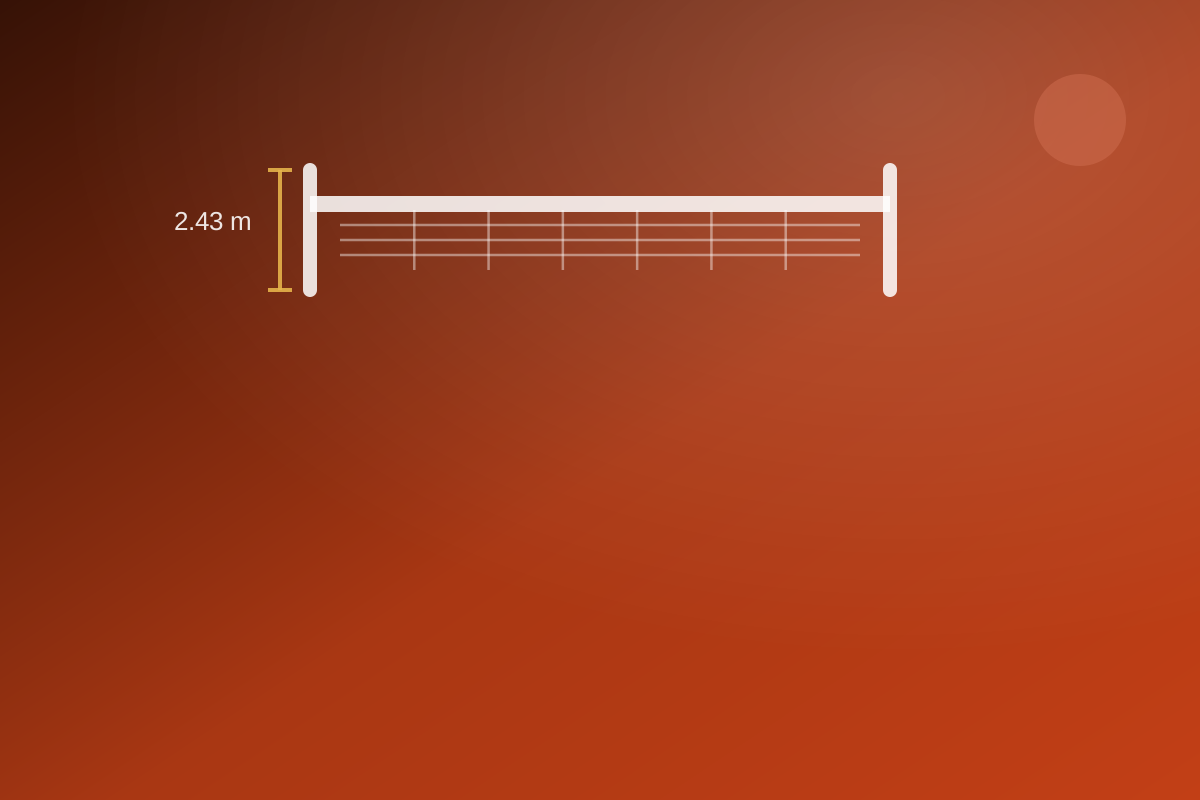 Equipment · A rod marking the legal net-crossing width.
A flexible rod mounted above each sideline on the net; a ball that crosses outside the antennae is ruled out even if it would have landed in bounds.
B
 Rules · A legal attack by a player jumping from behind the attack line.
A back-row player may attack a ball above net height only by jumping from a takeoff behind the three-meter attack line.
 Skills · A defensive jump at the net to intercept an attack.
Front-row players jump to stop an attack at the net; a block that is driven straight down for an immediate point is often called a roof or a stuff block.
-
Stats · Credit for a shared block that helps end a rally.
Statistical credit given to a blocker who contributes to a block that ends in a point, typically when two or more blockers touch the same attack.
 Skills · Another name for the forearm pass.
An underhand forearm pass, typically a team's first contact against a serve or a hard-driven attack.
 Skills · The classic three-touch offensive sequence.
The common shorthand for volleyball's default rally pattern: a forearm pass, an overhead set, and an attacking hit.
D
 Scoring · A tie late in a set requiring a two-point win margin.
The tied score late in a set — such as 24-24 — after which play continues until one team leads by two points.
 Skills · A defensive save of an opponent's attack.
A defensive contact that keeps a hard-driven attack alive, most often played with a low forearm platform or, in an emergency, a pancake.
 Stats · The share of defensive opportunities converted into digs.
A rate stat measuring how often a defender successfully keeps an attacked ball in play relative to total defensive opportunities.
 Rules · Touching the ball twice in succession illegally.
A fault where one player touches the ball twice in a row, except on a team's permitted first contact against a hard-driven ball.
F
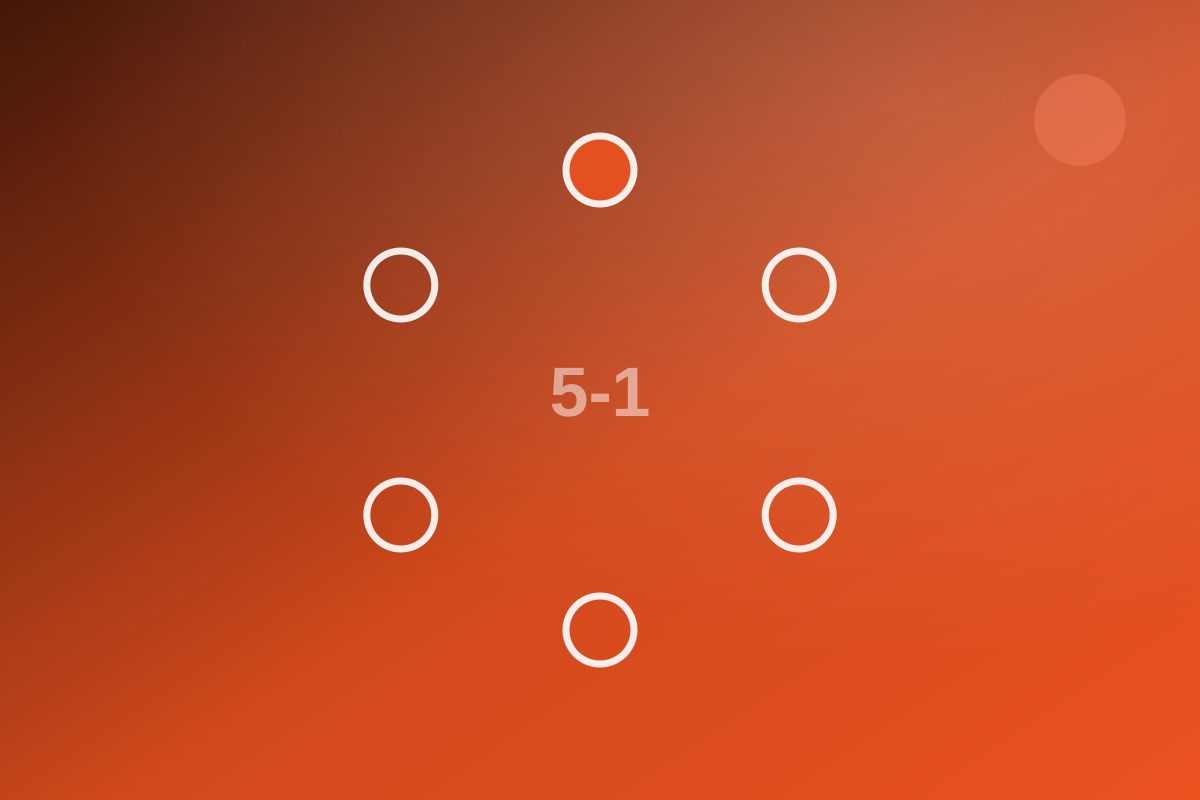 Systems · An offense run by a single setter across all six rotations.
One dedicated setter plays every rotation, giving the team three front-row attackers whenever the setter is in the back row.
-
Skills · A spin-free serve that moves unpredictably in flight.
A serve struck with no spin, which makes the ball wobble and dip unpredictably as it crosses the net, making it hard to pass cleanly.
-
Rules · An illegal fourth team touch before the ball crosses the net.
A fault called when a team contacts the ball a fourth time without it crossing back over the net; a block does not count toward the three-touch limit.
 Systems · An easy, unattacked ball sent back over the net.
A ball returned over the net without an aggressive attack, usually because the sending team could not set up a real attack — an opportunity for the receiving team's defense to reset to base positioning.
H
-
Stats · A rate stat weighing kills against attacking errors.
A more complete attacking metric than kill percentage, calculated as kills minus attacking errors divided by total attempts, to capture both power and consistency.
J
-
Skills · A serve hit with a full approach and jump.
A high-power serve hit like an attack, with a running approach and a jump, trading some consistency for extra speed and a steeper angle.
-
Skills · A spin-free serve hit with an approach for extra pace.
A hybrid serve that adds an approach step or small jump to a standard float serve's spin-free contact, gaining pace while keeping the unpredictable float movement.
K
 Skills · An attack that scores a point outright.
Any attacking hit — a spike, tip or roll shot — that lands for an immediate point, whether untouched or after deflecting off a blocker.
-
Stats · The share of a hitter's attacks that score kills.
The percentage of a player's total attack attempts that result directly in a kill, a basic measure of attacking productivity.
L
 Liberolih-BEH-roPositions · A back-row defensive specialist in a contrasting jersey.
A defense-only position that substitutes freely for back-row players but can never attack the ball above the net or block.
 Positions · Officiating tracking of the libero's substitution pattern.
The scoring table's record of every libero replacement during a match, kept separately from a team's regular substitution count.
M
-
Scoring · A point that would win the entire match if scored.
The point, in the final set a team needs to win, at which scoring the next rally ends the match outright.
O
 Skills · Offense run from an imperfect first-ball pass.
A play where the first-contact pass is too far off target for a team's normal offensive pattern, forcing the setter and hitters to improvise.
 Systems · A positioning fault relative to a player's rotational neighbors.
A fault called when a player is not correctly positioned relative to their immediate rotational neighbors at the instant the ball is served.
P
-
Skills · A flat-hand emergency dig just off the floor.
A last-instant defensive save where a player slides a flat, open hand under a ball about to hit the floor, popping it back into play.
-
Skills · A back-row attack from the middle of the court.
A legal back-row attack hit from behind the attack line at the middle of the court, adding a fourth attacking option beyond the three front-row hitters.
Q
 Skills · A very fast, low set to a middle attacker.
A low, fast set delivered so close to the setter's release that the hitter is already airborne when the ball leaves the setter's hands, aimed at beating the block.
R
-
Scoring · Continuous play from serve until the point ends.
The sequence of contacts, from the serve to the moment the ball is grounded or a fault is called, that decides a single point.
 Scoring · A point awarded on every rally, regardless of who served.
The modern scoring system, adopted by the FIVB in 1999, in which every rally produces a point for whichever team wins it.
 Rules · The clockwise movement of players after winning serve.
Whenever a team wins the right to serve, its six players rotate one position clockwise before the next serve.
S
-
Skills · The overhead touch that delivers the ball to a hitter.
A precise, usually fingertip overhead touch that places the ball for a teammate's attack; a set that leads directly to a kill is recorded as an assist.
 Skills · A setter's own attack on the second team touch.
A surprise attack where the setter, instead of setting a teammate, tips or hits the ball over the net on the second contact.
-
Scoring · Winning the serve back from the opponent.
The moment a team wins a rally on the opponent's serve, earning the right to serve next — the central mechanic of the older side-out scoring system, and still the term for changing service in rally scoring.
 Scoring · The older system where only the serving team could score.
The scoring system used before 1999, under which winning a rally while receiving serve only earned the right to serve next, not a point.
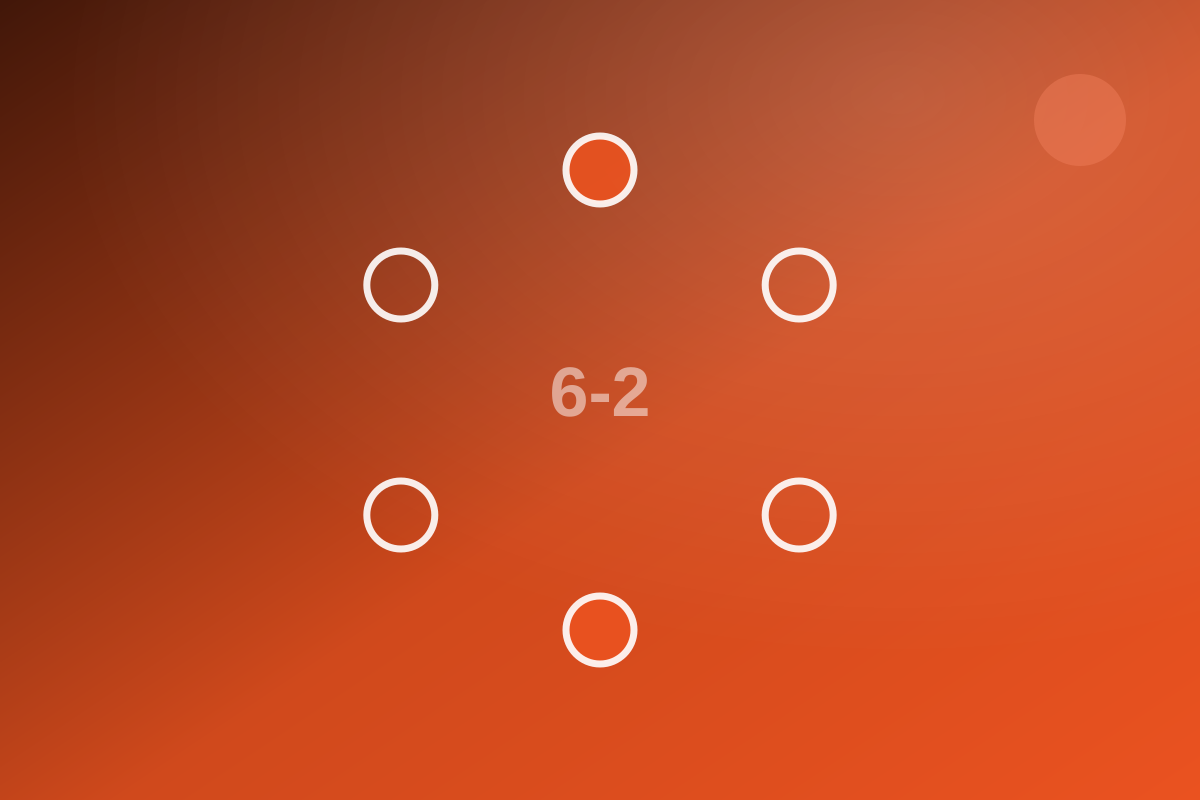 Systems · An offense that alternates between two back-row setters.
Two players share setting duties, each setting only when rotated into the back row, so the team always has three front-row attackers.
-
Skills · A middle-blocker attack approached from an angle.
A fast-tempo attack, usually run by a middle blocker, approached from a lateral angle rather than straight up, stretching the block wider along the net.
-
Skills · A hard, downward-angled attacking hit.
An attack struck with a full jump and arm swing, driving the ball sharply downward into the opponent's court.
-
Scoring · Winning a match without dropping a set.
A match won without losing a single set — for example, 3-0 in indoor volleyball or 2-0 in beach volleyball.